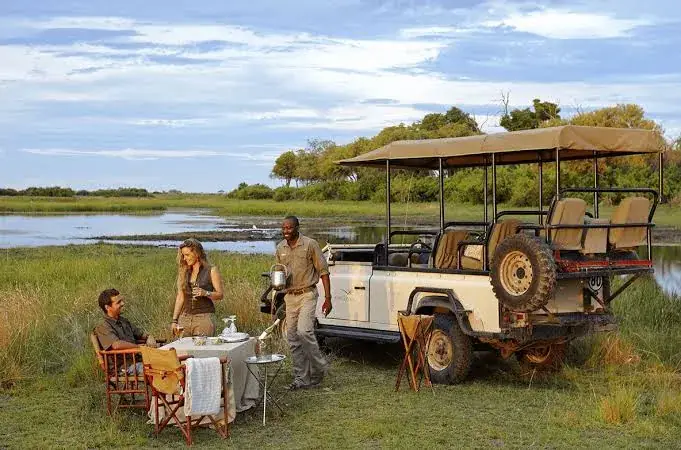
Strategic Architectural Framework: Best Adventure Travel Plans for Couples
The architecture of joint expeditionary travel requires a systematic evaluation of environmental parameters, physical resource demands, and team dynamics. While consumer tourism literature frequently handles adventure itineraries as basic compilations of exciting activities, the operational reality demands a rigorous approach to logistics and risk management. A failure to analyze the subtle interaction between changing wilderness conditions and individual capabilities can convert a planned journey into a severe logistical breakdown.
An objective analysis of expeditionary planning must look past the superficial narratives found on commercial social media platforms. The global adventure hospitality market contains a highly fragmented array of choices, each possessing unique regulatory constraints, seasonal weather baselines, and emergency response limitations. Traveling partnerships must navigate these complex structural realities to secure a reliable return on both their invested financial capital and their finite discretionary time.
This study functions as a definitive structural reference for analyzing, designing, and executing high-stakes wilderness and multi-sport itineraries. By filtering geographic and tactical variables through established operational frameworks, couples can transition from impulsive vacation choices to strategic risk management. The ultimate objective is to establish a clear, repeatable methodology for developing itineraries that deliver deep shared resilience, reliable logistical performance, and high long-term utility.
Understanding “best adventure travel plans for couples”
The operational designation “best adventure travel plans for couples” is widely used across consumer booking platforms, yet its technical definition within professional expedition management remains poorly structured. In mass-market advertising, the concept is routinely flattened into a sequence of curated outdoor backdrops or soft-adventure excursions managed by large resorts. This superficial approach assumes that all partnerships share identical physical conditioning baselines, psychological risk tolerances, and technical wilderness skills. In reality, an expedition blueprint is only optimal if its explicit physical demands and environmental conditions match the operational capabilities of the participants.
Deconstructing the Expedition Matrix
A comprehensive analysis reveals that the true utility of an adventure plan is governed by three primary structural dimensions:
-
The Physical Asymmetry Quotient: The variation in physical stamina, technical skills, and comfort zones between the two partners, which must be systematically balanced to prevent operational strain.
-
The Environmental Remoteness Gradient: The exact distance from established infrastructure, which dictates the complexity of supply lines, communication grids, and emergency evacuation access.
-
The Technical Dependency Factor: The level of specialized knowledge required for safe navigation, including ice ax self-arrest, blue-water navigation, or high-altitude metabolic adjustment.
Risks of Supervised Exploitation
When travelers rely on generic, commercialized adventure lists, they expose their schedules and personal safety to significant systemic vulnerabilities. A backcountry route celebrated for its untamed beauty may lack the reliable water sources or emergency shelter assets required by individuals unfamiliar with self-supported alpine trekking. Conversely, a highly controlled tour might eliminate risk entirely while introducing rigid schedules that neutralize the feeling of genuine exploration. Therefore, identifying the authentic best adventure travel plans for couples requires filtering contract and route alternatives through a strict matrix of physical capability, regional microclimates, and logistical redundancies.
Deep Contextual Background
The historical development of adventure-centric travel within the domestic and international leisure markets is deeply connected to military exploration legacies, geographical discoveries, and technological advancements in protective gear. Throughout the early to mid-twentieth century, wilderness expeditions were primarily conducted by highly specialized scientific teams or wealthy solo adventurers. These early journeys prioritized basic survival and geographic mapping, offering minimal room for shared leisure or structured partnership development.
Technological Democratization
The proliferation of lightweight synthetic fabrics, satellite navigation networks, and advanced off-road transit systems during the late twentieth century democratized access to remote areas. Terrains that previously required months of heavy military planning became accessible to recreational travelers within a few transit days. This technical shift allowed boutique expedition operators to build structured frameworks capable of supporting civilian partnerships in challenging environments like the Chilean fjords, the Alaskan interior, or the Himalayan valleys.
Institutional Consolidation
In the contemporary travel market, the adventure sector has transitioned from a loose collection of local guides to a highly organized segment of the global hospitality economy. Major conservation organizations and premium hospitality brands have developed sophisticated eco-lodges and mobile base camps that combine wilderness immersion with high-end safety systems. This structural evolution means that modern planners do not need to choose between raw exploration and professional risk mitigation; instead, they can analyze how well an operator’s technical support systems align with their itinerary goals.
Conceptual Frameworks and Mental Models
To systematically evaluate prospective wilderness or multi-sport plans, travelers should utilize several distinct mental models. These analytical tools help prevent decision-making based on emotional responses to idealized promotional media.
The Competency-Challenge Equilibrium
Derived from classic human performance theories, this framework charts the technical and physical skills of both participants against the environmental difficulty of the route. If the challenge level exceeds the competency baseline of the less experienced partner, the itinerary generates acute anxiety and operational safety risks.
Planners must aim for the equilibrium frontier, ensuring the plan provides enough novelty to stimulate engagement without causing psychological or physical exhaustion.
The Redundant Lifeline Model
This model evaluates an adventure plan by the number of independent backup systems built into its logistical framework. If an itinerary relies on a single cellular network for navigation, features only one water purification system, or lacks a secondary emergency extraction path, it is structurally flawed. A robust plan must incorporate overlapping redundancies, ensuring that the failure of any single component cannot compromise the safety of the entire journey.
The Resource Depletion Gradient
This framework tracks the consumption of physical energy, clean water, thermal reserves, and communication power over the duration of an expedition. Planners must calculate how these resources drop during extended exposure to altitude, cold, or high humidity. The model mandates that rest blocks and supply pickups be placed along the route to prevent the team from dipping into critical reserves before reaching safety.
Key Categories or Variations
Adventure travel plans can be organized into distinct structural variations based on geomorphological demands, primary locomotion methods, and infrastructure support. Each category carries clear advantages and distinct operational trade-offs.
Self-Supported Wilderness Trekking
Environments like the John Muir Trail, the Icelandic highlands, or the deep circuits of Patagonia demand complete reliance on carried equipment and personal physical effort. These itineraries excel at providing total environmental isolation, zero distraction from modern notifications, and deep shared accomplishment. The primary trade-off is found in high physical weight loads, exposure to rapid weather changes, and total isolation from immediate medical infrastructure.
Guided Multi-Sport Expeditions
These plans combine distinct activities—such as sea kayaking, mountain biking, and rock climbing—within a single regional footprint, typically supported by professional logistics teams. They offer high experiential variety, top-tier equipment maintenance, and reliable guide support. However, they introduce higher baseline costs, rigid daily schedules, and reduced opportunities for private, independent exploration.
Overlanding and Vehicular Exploration
Traversing regions like the Australian Outback, the desert tracks of Utah, or the mountain passes of the Andes using custom 4×4 platforms prioritizes mechanical range and equipment capacity. These setups allow couples to carry extensive support assets, including hard-sided refrigeration, complex power grids, and advanced medical setups, over vast distances. The primary vulnerabilities include mechanical breakdowns, variable road conditions, and strict fuel supply dependencies.
Blue-Water Marine Expeditions
Itineraries focused on coastal sailing, long-distance sea kayaking, or multi-day liveaboard diving across regions like the Galápagos or the Indonesian archipelagos utilize marine environments as the primary path. They provide immediate access to remote island ecosystems and high marine wildlife density. The structural constraints include marine motion sickness risks, tight living quarters that test personal boundaries, and absolute dependence on maritime weather patterns.
High-Altitude Alpine Ascent
Targeting classic mountain passes or summits in the Alps, the Andes, or the Canadian Rockies structures the entire plan around vertical progression and metabolic adaptation. These itineraries offer unmatched spatial views and demanding physical challenges. The primary liabilities include acute mountain sickness risks, extreme cold exposure, and severe weather dependencies that can stall travel for days at a time.

Decision Logic for Itinerary Selection
Selecting among these distinct adventure styles requires an honest evaluation of the team’s shared technical baseline. If a partnership exhibits a large gap in wilderness navigation skills, the decision matrix should automatically favor guided multi-sport expeditions or overlanding setups, where structural safety nets are built into the daily operations. If both partners possess high physical resilience but seek to minimize mechanical complexity, self-supported wilderness trekking provides the cleanest path to deep environmental immersion.
Detailed Real-World Scenarios
To analyze how these expedition models perform under real-world pressures, we can evaluate specific scenarios through a lens of route logistics and potential failure modes.
Scenario A: The High-Altitude Asymmetry Strain
A couple attempts a self-guided trek along a high-altitude circuit in Peru, such as the Huayhuash or Ausangate routes. One partner adapts efficiently to the eleven-thousand-foot baseline, while the other experiences persistent altitude-induced migraines and reduced lung capacity.
The operational breakdown happens when the faster partner pushes the pace to maintain the initial schedule, causing the struggling partner to experience physical exhaustion. Managing this failure mode requires setting flexible daily distance milestones and establishing clear triggers for descent before health risks escalate.
Scenario B: Overlanding Mechanical Isolation
A pair executes a remote overland loop through the arid canyonlands of the American Southwest during late spring. On day three, their custom off-road vehicle suffers a catastrophic suspension failure on a remote backcountry trail, miles away from cellular networks.
The hidden risk is a lack of communication redundancy. If the couple relies solely on standard mobile phones, they are effectively stranded until another vehicle passes. A successful recovery requires activating an independent satellite communication device, delivering precise coordinate data to regional recovery teams, and utilizing carried survival assets to maintain hydration while waiting for assistance.
Scenario C: Blue-Water Tidal Entrapment
A couple plans an independent sea kayaking and beach camping itinerary along the rugged coast of Alaska or the Pacific Northwest. They fail to carefully calculate the regional ten-foot tide variations when setting up their coastal campsite.
The failure mode occurs during the night when an incoming high tide floods the low-lying beach camp, damaging electronic navigation gear and soaking down sleeping bags. This situation highlights why checking marine charts and establishing campsites well above the maximum high-water mark is critical when exploring dynamic coastlines.
Scenario D: Multi-Sport Weather Compression
A couple books a guided multi-sport itinerary in the Swiss Alps, involving paragliding, canyoning, and via ferrata climbing. A persistent low-pressure system moves over the region, bringing heavy rain and high winds for four consecutive days.
The second-order effect is the complete shutdown of all high-angle and water-based activities due to flash flood and wind risks. If the tour operator lacks indoor or low-elevation backup plans, the couple faces a week of expensive isolation in a mountain lodge. This failure mode emphasizes the need to audit an operator’s bad-weather alternatives before booking a trip.
Planning, Cost, and Resource Dynamics
A professional adventure analysis must treat capital expenditures not as a simple total cost, but as a fluid equation shaped by equipment life cycles, permit access, and emergency rescue setups.
Equipment Lifecycle Investments
Unlike traditional resort travel, where costs are consumed entirely during the stay, adventure travel requires substantial investments in durable equipment. High-quality four-season tents, technical technical apparel, specialized footwear, and satellite tracking gear carry significant upfront costs but serve as multi-year safety assets. Attempting to cut costs by using substandard or worn-out gear increases the probability of equipment failure during a trip.
The Real Cost of Emergency Extraction
Planners must evaluate the financial implications of remote medical emergencies. A standard health insurance policy rarely covers the cost of a private helicopter extraction from a remote mountain trail or a deep canyon network. Securing a specialized medical evacuation membership is a critical planning step that transfers the risk of high search-and-rescue fees to professional emergency response syndicates.
Tools, Strategies, and Support Systems
Successfully executing a remote adventure itinerary relies on using a specialized suite of navigation tools and proactive habits. These systems protect the couple from common wilderness hazards and communication gaps.
Satellite Messaging Networks
Relying on terrestrial cellular networks when exploring deep mountain valleys or coastal fjords is a serious operational error. Planners should invest in dedicated satellite messengers that offer two-way text communication, real-time tracking updates, and direct access to global emergency coordination centers. This technology ensures the team can request assistance or modify logistics even when completely off the grid.
High-Resolution Topographic Mapping
Digital route planning should utilize advanced mapping applications that allow users to download detailed topographic layers, slope-angle shading, and historic water-source data for offline use. Before leaving network coverage, couples must review their digital routes together, identifying key navigation markers, potential campsites, and emergency escape trails.
Water Purification Redundancy
A reliable clean water supply is the most critical element of any wilderness expedition. Planners should implement a multi-stage water treatment strategy, combining a primary physical pump filter to remove sediment with a backup chemical purification method like iodine or chlorine dioxide tablets. This dual-system setup ensures the team can continue to produce safe drinking water if their primary mechanical filter breaks or freezes.
Risk Landscape and Failure Modes
Every adventure travel plan is exposed to a unique combination of environmental threats and operational challenges that can quickly compromise personal safety.
Environmental Sudden Shift Drops
Wilderness environments can experience rapid weather changes that completely invalidate initial route plans. A clear morning in an alpine meadow can quickly transform into a severe whiteout blizzard or an intense lightning storm by mid-afternoon. Planners must monitor localized barometric pressure trends and establish clear turn-around times to ensure the team can reach safe shelter before severe weather sets in.
Team Communication Breakdown
Under conditions of intense physical fatigue, cold exposure, or low calorie intake, clear interpersonal communication can degrade rapidly. This psychological breakdown often leads to poor decision-making, hidden injuries, or disagreements regarding navigation choices. Teams must practice proactive communication habits, checking in regularly on energy levels, physical comfort, and warmth before exhaustion compromises judgment.
Specialized Gear Failures
The failure of a critical piece of equipment—such as a torn tent fly in a rainstorm or a broken camp stove in freezing temperatures—can quickly escalate a simple trip into an emergency situation. Planners should carry a versatile field repair kit containing heavy-duty tape, replacement valve seals, multi-tools, and structural patch materials. This preparation allows the team to perform durable gear repairs in the field and maintain the integrity of their shelter and kitchen systems.
Governance, Maintenance, and Long-Term Adaptation
Frequent wilderness adventurers should view their trip planning as an evolving system that undergoes continuous improvement based on real-world field data.
Post-Expedition Technical Debriefs
Within forty-eight hours of returning from a remote itinerary, partners should conduct a structured review of their equipment and route choices. This assessment should avoid general impressions and focus on specific operational details. Did the weight of the packs slow travel below the projected pace? Were any pieces of gear carried but never used? Documenting these details helps ensure that future equipment selections are lighter and more efficient.
Performance Milestone Adjustments
Couples should establish clear physical and operational guidelines to shape future trip planning. If a post-trip debrief reveals that a partner experienced persistent joint strain or excessive fatigue during long mileage days, future route profiles should automatically be adjusted to feature shorter stages or lower elevation gains. This data-driven approach ensures that physical challenges remain rewarding rather than exhausting.
The Expedition Readiness Checklist
-
Navigation Check: Are all regional topographic maps downloaded for offline use on multiple devices?
-
Power Audit: Do carried power banks possess sufficient capacity to run all navigation and emergency gear for the duration of the trip?
-
Medical Inventory: Are all wilderness first-aid kits fully stocked with unexpired trauma supplies and personal medications?
-
Permit Verification: Are all backcountry access permits signed, printed, and secured against moisture damage?
Measurement, Tracking, and Evaluation
Evaluating the success of a high-exertion adventure investment requires tracking both clear quantitative data and subtle qualitative indicators of shared resilience.
Leading and Lagging Indicators
A leading indicator is a metric analyzed before departure that correlates strongly with a successful trip, such as the total elevation gain completed during training hikes or the accuracy of a regional weather forecast model. A lagging indicator is analyzed after returning home, measuring data like the variance between projected and actual daily trail paces, or the total percentage of equipment that performed without failure.
Qualitative Integrity Signals
Qualitative tracking focuses on the psychological health and decision-making flow of the partnership under stress. A positive signal is the emergence of a natural, collaborative rhythm when setting up camp, navigating off-trail sections, or managing unexpected delays. Negative signals include unexpressed physical discomfort, persistent arguments over navigation choices, or a shared feeling of relief when canceling a route segment, which typically points to a plan that mismatched the team’s true skill levels.
Practical Wilderness Records
-
Record Case 1 (Pack Weight Assessment): “Carrying a base pack weight above thirty-five pounds reduced our average trail pace from two miles per hour to one point two miles per hour over rough terrain; future wilderness trekking plans must prioritize ultra-light shelter components.”
-
Record Case 2 (Thermal Management Log): “The down sleeping systems failed to maintain comfort when relative humidity levels exceeded ninety percent along the coast; future maritime expeditions must utilize synthetic insulation layers.”
-
Record Case 3 (Navigation Systems Tracking): “The primary satellite messenger experienced a forty-minute signal delay in deep canyon networks; future desert itineraries must incorporate secondary terrestrial compass routes.”
Common Misconceptions and Oversimplifications
The global adventure tourism industry promotes several common myths that can easily lead couples to make poor decisions when planning a wilderness trip.
The Fitness Equates to Skill Illusion
A common mistake among travelers is assuming that an excellent cardiovascular fitness level from gym training automatically translates into safe wilderness performance. True outdoor capability relies heavily on specific technical skills, such as reading terrain, managing pacing over uneven ground, and spotting early signs of hypothermia. Planners must focus on building real field experience alongside basic physical conditioning to ensure safety in challenging environments.
The Guide Solves Every Problem Myth
Many couples believe that hiring a professional guide completely eliminates the need for personal preparation or physical readiness. While a skilled guide provides invaluable safety leadership and navigation expertise, they cannot carry a guest’s pack or shield them from physical fatigue. An under-prepared traveler can still face significant physical strain and compromise the pacing of the entire group, making personal conditioning essential even on fully guided trips.
The Gear Solves Experience Gaps Equation
There is a widespread belief that purchasing the most expensive, top-tier technical equipment can make up for a lack of foundational wilderness experience. However, advanced gear is only effective if the user understands how to deploy and maintain it under pressure. A high-end four-season tent or a complex multi-fuel stove can become an operational frustration if a couple has never practiced setting it up in high winds or cold rain before their trip.
Ethical and Practical Considerations
Modern adventure travelers face important environmental and social responsibilities when visiting fragile ecosystems and remote communities.
Leave No Trace Accountability
As popular backcountry routes face increasing visitor volumes, couples must strictly adhere to established Leave No Trace principles to preserve the wilderness environment. This discipline includes packing out all solid waste, camping strictly on durable surfaces, and avoiding any actions that could disturb local wildlife or contaminate pristine water sources. Maintaining high environmental standards ensures that these wild spaces remain vibrant and open for future exploration.
Local Economic Contribution
Many remote adventure itineraries pass through small rural communities or indigenous lands that face unique economic challenges. Travelers should make a conscious effort to purchase supplies from local markets, hire independent regional guides, and respect traditional land-use guidelines. This responsible approach helps ensure that the economic benefits of adventure tourism directly support the communities hosting the journey.
Conclusion
Developing the best adventure travel plans for couples requires looking past superficial media trends to focus on the practical realities of wilderness logistics and team dynamics. By evaluating environmental conditions, physical skill baselines, and resource redundancies through clear planning frameworks, partnerships can balance challenge and safety to maximize the rewards of their journeys. The long-term success of an adventure strategy relies on understanding these operational details, preparing for unexpected equipment or weather failures, and using past field insights to continuously improve future routes. A well-designed expedition plan provides a dependable foundation for deep shared discovery, physical achievement, and lasting mutual value.