Best Glamping Plans for Couples: The Definitive Luxury Guide
The global intersection of luxury hospitality and outdoor recreation has transitioned from a niche travel trend into a highly structured segment of the experiential accommodation economy. Historically, outdoor lodging required a binary choice between primitive self-sufficiency and traditional fixed-site resort infrastructure. The emergence of high-tier glamping—glamorous camping—has fundamentally reconfigured this landscape by decoupled geographic isolation from physical discomfort. This shift responds directly to changing consumer preferences that prioritize environmental proximity, privacy, and architectural novelty.
For couples navigating the contemporary travel market, selecting an outdoor experience involves balancing disparate operational variables. The modern hospitality landscape presents an overwhelming array of structural types, geographic climates, and service models. These options range from self-supported geodesic domes in arid environments to fully staffed safari tents in temperate rainforests. Without a systematic methodology for evaluating these offerings, travelers frequently encounter friction points where the realities of natural environments clash with the expectations of high-end hospitality.
Evaluating the market requires an analytical framework that goes beyond aesthetic appeal. True luxury in outdoor accommodations is defined by the invisible infrastructure that supports the guest experience. Off-grid power management, climate control efficacy, waste mitigation, and acoustic isolation between units dictate the actual quality of a stay. Consequently, identifying the best glamping plans for couples demands an examination of both the physical structures and the operational systems that sustain them. This comprehensive analysis establishes a rigorous foundation for assessing how modern couples can navigate, plan, and optimize these sophisticated outdoor experiences.
Understanding “best glamping plans for couples”
The phrase “best glamping plans for couples” is frequently reduced to a superficial checklist of visual aesthetics, such as string lights, canvas walls, and scenic backdrops. In professional hospitality analysis, however, a “plan” refers to a comprehensive operational and experiential blueprint. This blueprint synthesizes geographic location, structural engineering, environmental biology, and service design into a cohesive itinerary. The primary challenge in executing these plans lies in the inherent tension between wild landscapes and the predictable comfort required for romantic or recreational isolation.
Oversimplifying this selection process often introduces significant friction. Many couples select destinations based entirely on digital media representation, ignoring the microclimates and structural limits of the accommodation. For example, a uninsulated canvas safari tent located in an alpine environment can experience internal temperature drops that severely undermine guest comfort, regardless of the quality of the interior furnishings. A successful plan must account for ambient humidity, local insect populations, wind vectors, and the specific thermal mass of the structure.
Furthermore, the concept of a couples-focused itinerary implies a level of acoustic and visual privacy that standard campground configurations cannot provide. True structural isolation requires intentional site topography and generous spatial buffering between units. When properties crowd structures together to maximize density, the fundamental objective of personal seclusion is compromised. Therefore, analytical evaluation of these travel plans shifts the focus from mere decorative luxury to the underlying architectural and spatial engineering of the site.
Contextual Background: From Safari to Modern Off-Grid Infrastructure
The historical lineage of luxury outdoor accommodations extends back to early 20th-century African safaris, where wealthy European and American travelers demanded familiar domestic comforts while exploring remote landscapes. These early iterations relied on intensive human labor to transport heavy canvas tents, hardwood furniture, porcelain, and complex culinary supplies across wild terrain. The primary objective was the replication of urban estate luxury within an untamed environment, establishing a clear precedent for modern experiential lodging.
The Rise of Eco-Tourism
During the late 1990s and early 2000s, the rise of eco-tourism introduced sustainability metrics to the luxury travel sector. Travelers increasingly sought experiences that minimized permanent environmental impacts while maintaining high comfort levels. This era catalyzed the development of low-impact foundation systems, such as helical piers and raised wooden decks, which allowed large structures to sit above delicate root systems and terrain without altering natural water runoff patterns.
Technological Convergence
The contemporary glamping market represents a convergence of this eco-tourism philosophy with advanced off-grid engineering. The development of high-efficiency solar arrays, lithium-iron-phosphate (LiFePO4) battery banks, and low-draw climate control systems has transformed the capabilities of remote structures. Accommodations no longer require connection to municipal grids to provide reliable hot water, refrigeration, and internet connectivity, expanding the geographic possibilities for high-tier travel.
Demographic Adaptations
Demographic shifts have further refined the market, as modern couples increasingly prioritize shared experiential capital over material acquisitions. This behavioral transition has incentivized operators to design spaces that facilitate shared activities, such as integrated stargazing apertures, private cedar soaking tubs, and custom outdoor culinary stations. The modern glamping plan is consequently an engineered environment optimized for psychological restoration and interpersonal connection away from urban centers.
Conceptual Frameworks for Evaluating Outdoor Luxury
To systematically identify the best glamping plans for couples, analysts deploy specific mental models that break down the travel experience into quantifiable variables. These frameworks prevent decision-making based on emotional responses to marketing materials, ensuring that couples choose plans aligned with their actual tolerance for environmental exposure.
The Exposure-to-Comfort Spectrum
This model positions accommodations along an axis where one extreme is absolute vulnerability to nature (primitive camping) and the other is complete environmental isolation (a sealed urban hotel room). High-performance glamping operates in the optimal mid-tier of this spectrum, maximizing sensory proximity to the outdoors while utilizing engineered barriers to eliminate physical discomfort.
The Luxury Triad Matrix
This framework evaluates a destination based on three independent variables: Autonomy, Amenities, and Authenticity. Autonomy measures the couple’s control over their schedule and privacy. Amenities quantify the physical infrastructure, such as plumbing, heating, and bedding. Authenticity evaluates the integrity of the natural setting. The limit of this model lies in its zero-sum nature; maximizing amenities often requires heavy infrastructure that can degrade the environmental authenticity of the site.
The Operational Resilience Index
This model assesses how effectively an accommodation maintains its internal equilibrium during adverse weather events. A high-scoring structure maintains stable interior temperatures, low humidity, and structural silence during high-wind or heavy-precipitation events. Couples must utilize this framework to evaluate properties during shoulder seasons, when weather volatility is highest and structural failures are most disruptive.
Architectural Categories and Structural Trade-Offs
The physical structure of a glamping unit dictates its thermal efficiency, acoustic properties, spatial volume, and visual integration with the surrounding landscape. Understanding these architectural variations allows couples to align their specific comfort requirements with the appropriate structural typology.
Canvas Safari Tents
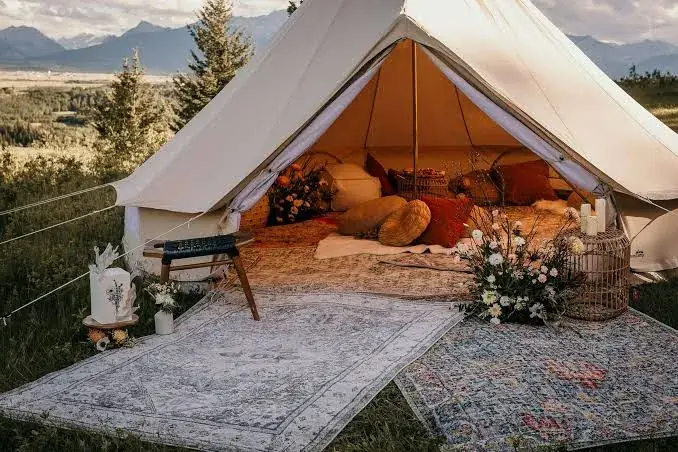
Safari tents utilize heavy-duty, marine-grade canvas stretched over timber or steel frameworks, typically anchored to a raised wooden platform. This design provides excellent ventilation and a classic aesthetic that emphasizes the auditory connection to nature, allowing guests to hear wind and wildlife. However, canvas offers minimal acoustic insulation between units and possesses low thermal mass, making it highly dependent on continuous internal heating or cooling systems.
Geodesic Domes
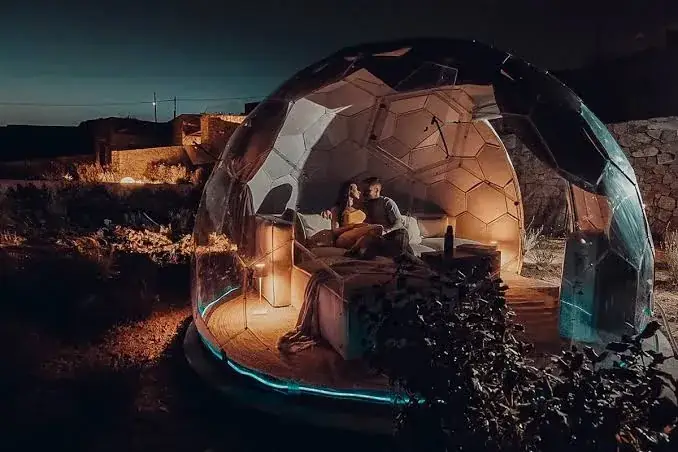
Constructed from a network of intersecting triangles that form a roughly spherical structure, geodesic domes offer exceptional volumetric space and structural strength. Their aerodynamic shape handles high winds and heavy snow loads with ease, while large transparent bay windows offer expansive views. The primary drawback is the potential for internal echo due to the curved interior walls, alongside rapid solar heat gain if the structure lacks adequate shading or reflective insulation layers.
Treehouses and Elevated Cabins
Elevated structures utilize nearby trees or heavy pilings to suspend the living space above the forest floor, providing unique vantage points and maximum privacy. These units offer rigid-wall insulation, traditional plumbing, and superior security from local wildlife. The trade-off involves limited accessibility due to stairs or suspension bridges, alongside significantly higher development and booking costs driven by complex structural engineering requirements.
Traditional Yurts
Originating from Central Asian nomadic cultures, modern yurts feature circular wooden lattice frames covered by durable fabric layers. They provide a balanced internal volume and excellent structural stability in circular wind patterns. While more structurally substantial than a safari tent, yurts can feel dark if they lack sufficient window cutouts, relying heavily on a central skylight for natural illumination.
Real-World Scenarios and Environmental Dynamics
Evaluating a glamping plan requires analyzing how specific environments interact with human biology and structural engineering over a multi-day stay. Below are detailed operational scenarios demonstrating how these factors manifest in various climates.
Arid Geodesic Infrastructure
A couple books a four-night stay in a luxury geodesic dome located in the high desert of the American Southwest during late spring. The site utilizes a standalone solar array with a propane generator backup to power a mini-split air conditioning system.
-
Environmental Dynamics: Daytime temperatures reach 95°F (35°C) with intense ultraviolet radiation, dropping rapidly to 42°F (5°C) after atmospheric radiation loss at night.
-
Operational Friction Points: The dome’s clear vinyl window creates a greenhouse effect during peak solar hours, straining the cooling system. At night, the lack of structural thermal mass requires the automated switching of the HVAC system from cooling to heating mode.
-
Failure Modes: If the solar battery bank reaches a critical discharge state at 3:00 AM due to sustained heating demands, the automated generator must start. A mechanical failure in the generator’s transfer switch would cause a total loss of climate control, exposing the occupants to near-freezing interior temperatures within two hours.
Temperate Rainforest Safari Canvas
A couple selects a canvas safari tent anchored on a river bluff in the Pacific Northwest during the autumn shoulder season. The unit features an internal wood-burning stove and an detached, semi-enclosed outdoor bathroom.
-
Environmental Dynamics: Continuous low-level precipitation with ambient humidity levels hovering between 85% and 95%. Wind vectors average 15 knots, flowing along the river corridor.
-
Operational Friction Points: High ambient humidity prevents wet apparel or towels from drying naturally inside the canvas enclosure. The hydro-acoustic signature of the nearby river creates a continuous white-noise floor that masks approaching weather changes but forces guests to speak at elevated volumes when outdoors.
-
Second-Order Effects: The semi-enclosed bathroom design introduces thermal shock when guests transition from the heated tent interior to the unheated bathing structure. If the wood-burning stove is fueled with unseasoned softwood, creosote accumulation occurs rapidly in the flue, causing smoke down-drafts into the living quarters.
Financial Dynamics: Cost Structures and Resource Allocation
The economics of high-tier glamping often parallel or exceed those of five-star urban hotels, driven by the substantial capital expenditure required to maintain remote infrastructure. Understanding the distinction between direct booking fees and hidden transactional costs is essential for accurate budget modeling.
Fixed and Variable Cost Vectors
Direct costs encompass the nightly base rate, localized hospitality taxes, and mandatory cleaning fees tied to remote waste management. Variable expenses include regional transit logistics, specialized outdoor gear allocations, and optional on-site service add-ons, such as private culinary execution or guided wilderness excursions.
Opportunity Costs of Remote Settings
Selecting an ultra-remote glamping destination introduces trade-offs regarding time efficiency. A site that requires a four-hour off-road vehicle transit from the nearest regional airport consumes a significant portion of a short travel itinerary. This logistical overhead reduces the time available for actual recreation, transforming a three-night weekend plan into a compressed, logistically demanding transit sequence.
Capital Allocation Strategy
Couples must analyze whether a property’s premium pricing reflects superior structural engineering or simple aesthetic staging. A lower-priced unit featuring robust climate control and strategic site isolation routinely delivers a superior experiential return compared to an expensive, poorly insulated structure optimized solely for social media photography.
Operational Tools and Site Assessment Strategies
To systematically verify the viability of a destination before booking, couples can utilize specialized digital tools and analytical strategies. These resources provide objective data that bypasses curated marketing photography.
Microclimate Analysis Tools
Utilizing historical weather engines allows travelers to analyze wind patterns, precipitation probabilities, and temperature swings for exact coordinates. Sites located at the base of canyons frequently experience cold air pooling at night, resulting in ambient temperatures significantly lower than those reported by general regional weather applications.
Topographical Modeling
Digital mapping platforms equipped with three-dimensional terrain rendering enable precise evaluation of a site’s spatial privacy. By analyzing the elevation lines between individual accommodation platforms, travelers can verify whether a unit possesses true visual isolation or is exposed to the sightlines of neighboring structures or communal footpaths.
Satellite Vegetative Assessment
Analyzing satellite imagery using normalized difference vegetation index (NDVI) filters reveals the actual density of the forest canopy during different seasons. A property that appears completely secluded in summer photography may lose its visual buffers during late autumn when deciduous foliage drops, compromising privacy.
Risk Landscape: Environmental and Logistic Failure Modes
Executing a remote travel plan involves managing unpredictable natural systems. A comprehensive strategy requires identifying potential failure modes and understanding how minor logistical errors can compound into significant disruptions.
Vector and Wildlife Intrusion
The proximity to natural habitats inherent to glamping introduces the certainty of insect and wildlife interactions. Canvas structures rely on zipper integrity and tension seals to exclude vectors. A minor gap in a floor-to-wall interface allows arachnid or insect entry, which can cause significant distress to guests unaccustomed to wilderness environments.
Hydrological Extremes
Flash flooding presents a major structural hazard for sites located within canyons or adjacent to low-lying river systems. Intense upland rainfall can cause rapid water level elevation hours before local signs manifest. If a site lacks automated hydrological warning systems, the physical safety of the occupants and their access corridors can be compromised.
Cascade Mechanics
A compounding failure occurs when an initial environmental event triggers a sequence of subsequent system breakdowns. For instance, a convective thunderstorm can wash out a unpaved access road, immobilizing the couple’s vehicle. If the same storm causes a lightning strike that disables the site’s solar inverter, the accommodation loses both its primary power and its water pump system. The lack of transit access prevents maintenance technicians from arriving quickly, transforming a minor luxury disruption into an isolated survival situation.
Long-Term Adaptation and Seasonal Travel Adjustments
A definitive glamping strategy must adjust dynamically across the calendar year, changing architectural preferences as environmental conditions shift. A property that delivers an exceptional experience in July may present substantial operational challenges in November.
Spring Adjustments
The primary environmental factor during spring is soil saturation and high insect hatching rates. Travelers should avoid low-lying meadow sites, which tend to retain moisture and foster dense vector populations. Rigid-walled structures elevated on platforms are preferred during this period to maintain a dry interior environment.
Summer Configurations
High summer demands maximum ventilation and thermal protection. Geodesic domes without external reflective coverings or dedicated air conditioning units should be avoided. Canvas structures with 360-degree mesh ventilation screens capitalize on natural breezes, minimizing reliance on mechanical cooling systems.
Autumn Strategy
Autumn introduces severe wind volatility and rapid temperature drops. The structural integrity of the accommodation becomes paramount during these months. Aerodynamic structures, such as domes or engineered yurts, manage high winds with significantly less structural noise than flat-walled safari tents, preserving sleep quality.
Winter Operational Modes
Winter glamping requires complete insulation packages and redundant interior heating sources. Accommodations must feature solid-wall construction, double-pane glass windows, and internal plumbing systems protected against freezing. A romantic itinerary during this season is highly dependent on the continuous operation of these mechanical thermal systems.
Evaluation Metrics: Measuring Experience Quality
Evaluating the success of a luxury outdoor itinerary requires tracking specific qualitative and quantitative signals. Moving beyond vague emotional assessments allows travelers to objectively measure whether a destination delivers on its financial and logistical promises.
Leading and Lagging Indicators
Leading indicators are verifiable metrics assessed before departure, such as the responsiveness of on-site management, the detail of provided packing protocols, and real-time weather forecasts. Lagging indicators are metrics assessed during and after the stay, including uninterrupted sleep duration, internal temperature stability, and the lack of vector intrusion.
Quality Assessment Checklist
-
Acoustic Isolation: Can ambient noise from neighboring units or infrastructure be heard within the primary living space?
-
Thermal Control Precision: Does the interior temperature fluctuate by more than 5°F (3°C) from the selected setting during night drops?
-
Water Infrastructure Reliability: Is hot water delivered continuously at a stable pressure for more than fifteen minutes?
-
Structural Integrity: Do canvas walls or support frameworks rattle or warp during wind gusts exceeding 15 knots?
Documentation Protocols
Maintaining a standard travel log allows couples to refine their preferences over time. Recording specific structural types, environmental variables, and comfort outcomes establishes an empirical baseline for future booking decisions.
Common Misconceptions in Experiential Travel
The rapid growth of the outdoor hospitality market has fostered several persistent misunderstandings that frequently lead to poorly planned trips.
Myth 1: Glamping is Identical to Luxury Hotel Stays
Many couples assume that a high-end glamping site operates exactly like an urban boutique hotel. In reality, even the most luxurious off-grid structures require guests to actively monitor resource consumption, operate wood-burning stoves, and navigate unpaved outdoor walkways in varying weather conditions.
Myth 2: All Canvas Structures Deliver Equal Performance
There is a profound difference between a cheap single-wall cotton tent and a multi-layered, fire-retardant, marine-grade canvas structure mounted on an insulated timber frame. Low-tier canvas stretches, leaks under sustained rain, and fails to retain heat, severely undermining comfort.
Myth 3: High Cost Automatically Guarantees Privacy
Price is often driven by interior design choices or proximity to famous national landmarks, rather than structural isolation. Without verified topographic buffers, high-priced sites can suffer from severe crowding, placing guests within direct line-of-sight of neighboring units.
Myth 4: Remote Locations Always Feature Unspoiled Views
The immediate surroundings of a glamping site may be scenic, but proximity to major highways or industrial agricultural zones can introduce unexpected audio or visual pollution. A thorough evaluation must analyze the regional landscape within a five-mile radius.
Myth 5: Off-Grid Utilities are Infinite
While modern lithium battery banks are highly efficient, sustained periods of heavy cloud cover or extreme temperatures can deplete energy reserves. Guests must maintain a conscious awareness of their utility footprint to prevent unexpected system shutdowns.
Myth 6: Summer is Always the Ideal Season
Peak summer heat can turn unshaded structures into uncomfortable environments, while attracting maximum insect activity. Shoulder seasons often provide more stable internal comfort levels and superior natural privacy due to reduced guest density.
Ethical and Environmental Considerations in Land Use
The development of luxury glamping sites introduces complex ecological pressures that responsible travelers must consider. Constructing permanent platforms and access roads in pristine wilderness areas can fragment local wildlife corridors and disrupt delicate topsoil chemistry. Sites must utilize minimal-impact engineering, such as removable ground-screw anchors instead of poured concrete foundations, to preserve the long-term integrity of the land.
Furthermore, water sourcing and waste disposal in remote areas place a significant burden on local infrastructure. Properties operating without municipal connections must transport water in and truck sewage out, or utilize advanced on-site filtration systems. Irresponsible waste management can contaminate local water tables and attract apex predators, altering natural foraging behaviors. Evaluating a property’s ecological certifications and waste mitigation strategies is therefore a critical component of assessing a glamping plan.
Ultimately, the best glamping plans for couples achieve a harmonious balance between human comfort and environmental stewardship. By selecting operators who prioritize low-impact infrastructure, renewable energy systems, and transparent ecological practices, travelers can enjoy remote landscapes without contributing to their degradation. This analytical approach ensures that the desire for natural isolation supports, rather than compromises, the preservation of wild spaces.